


Can Cervical Precancer Be Treated Without Major Surgery?

Medically reviewed by Dr. Ushashree Das
MCh in Gynaecological Oncology | 10+ years of Experience
- Yes, the surgery required for cervical precancer is always a minor surgery. These can be either an ablative or excisional method. Both of them take less than 15 minutes and are performed in a day care setting.
- Ablation: Lesions are treated by heating or freezing the abnormal cells, without cutting the tissue out.
- Excision: These remove abnormal tissue rather than destroying it.
If you have been told that there is an abnormal result in your PAP smear report, and you are scared of the consequences, let’s simplify the interpretation.
Seeing the word precancer can be frightening, especially when you’re not sure how serious it is or what happens next. But cervical precancer does not automatically mean you have cancer or that you will need major surgery.
What happens next depends on several things, including the type and grade of abnormal cells, your biopsy results, what your doctor sees during a colposcopy, and your individual circumstances. Some cervical changes can be monitored, while others may need treatment to remove the abnormal cells and prevent them from progressing.
So,
What does CIN (Cervical intraepithelial neoplasia) or Cervical precancer mean?
What are the treatment options for cervical precancer?
When is monitoring enough?
Is there ever a situation that you might need more extensive surgery?
Let’s look at what the different terms on your report mean, how doctors decide on the best treatment options for cervical cancer.
First, What Does “Cervical Precancer” Actually Mean?
Cervical precancer means that some cells on the cervix have become abnormal, but they are not cancer cells yet. If left untreated these changes can sometimes become cancer over time.
With cervical precancer, the abnormal cells are still limited to the surface layers of the cervix. They have not grown into the deeper tissues.
Cervical cancer is different. It develops when abnormal cells continue to change and begin to grow into the deeper tissues of the cervix. If cancer is not treated, these cells can grow further and may spread to other parts of the body.
Cervical precancer can often be found before cancer develops. This is one reason cervical screening, such as a Pap smear test and HPV testing, is so important. Finding these changes early gives doctors a chance to monitor them or remove the abnormal cells before they become cancer.
To confirm the diagnosis, your Gynecological Cancer Surgeon will examine your cervix, which is called “colposcopy” and take biopsy from the most abnormal area.
CIN 1, CIN 2 and CIN 3: What's the Difference?
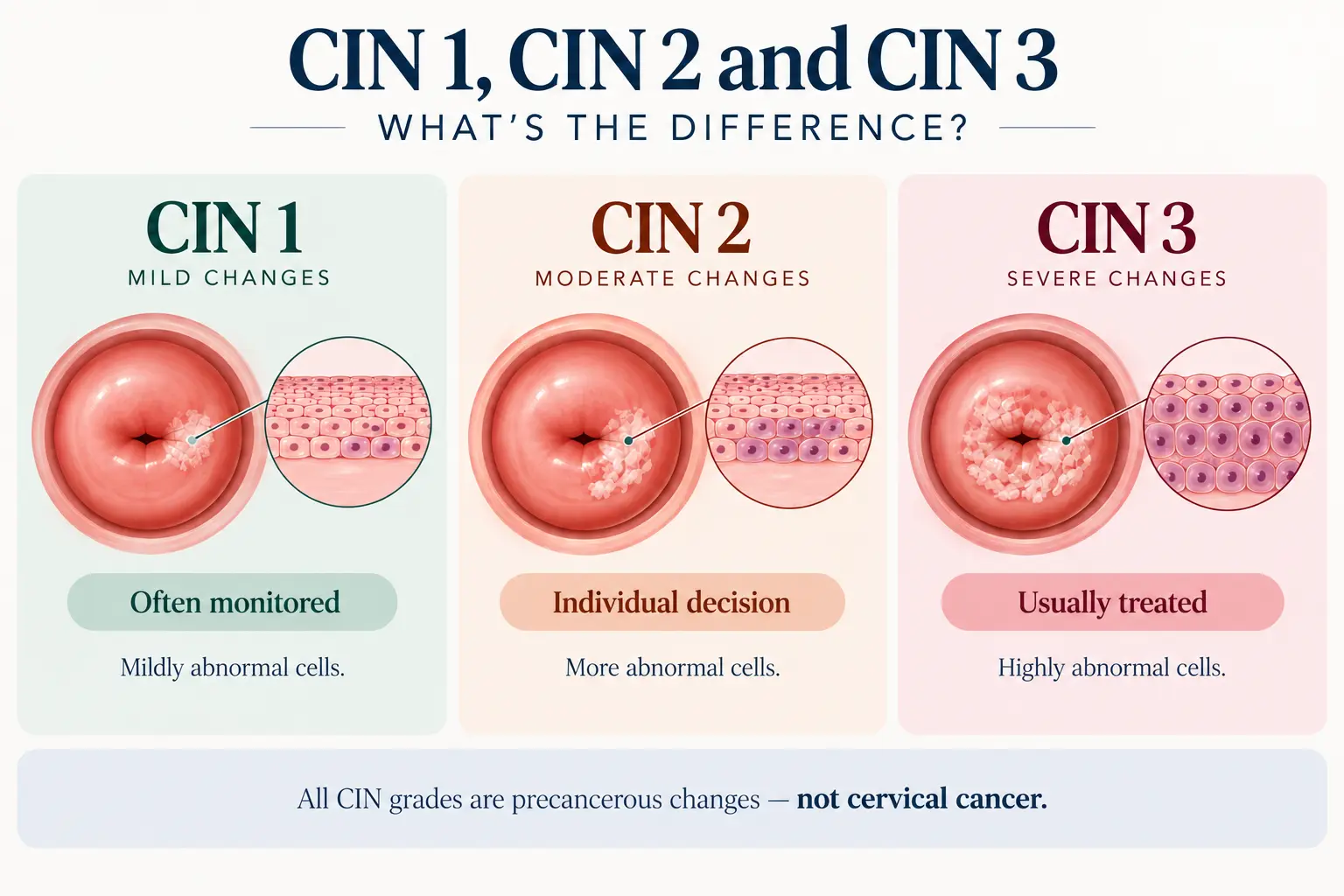
CIN 1: Often monitored
CIN 1 represents mild, low-grade changes in the cervical cells.
In many cases, these changes go away without treatment. That is why immediate removal of the abnormal tissue is not usually necessary for CIN 1.
Instead, we may recommend surveillance with repeat HPV testing, cervical screening or colposcopy at the appropriate interval.
A colposcopy is a quick clinic test that lets us take a closer look at the cervix to check for any unhealthy cells.
Think of it like using a magnifying glass with a flashlight to inspect your cervix.
The important word here is follow-up.
Observation does not mean ignoring the diagnosis. It means watching carefully to make sure the abnormality is resolving rather than progressing.
CIN 2: More of a judgement call
CIN 2 is a higher-grade abnormality.
Treatment is commonly recommended, although close observation can be considered in selected patients, particularly when factors such as age, pregnancy plans and colposcopy findings support that approach.
CIN 3: Usually treated
CIN 3 is a severe, high-grade precancerous change.
It is not cancer, but it has a higher potential to progress to invasive disease if left untreated. Unlike CIN 1, doctors generally don’t simply watch it indefinitely.
Treatment is usually recommended.
So if your biopsy report says CIN 3, the conversation with your gynaecologist is likely to focus on which treatment is most appropriate, rather than whether treatment is necessary at all.
So, Can Cervical Precancer Be Treated Without Major Surgery?
Now we can come back to the question at the centre of this article.
Can cervical precancer be treated without major surgery?
Yes
It can either be ablative or excisional treatment. Ablation destroys the abnormal or unhealthy cells in place. Excision removes the area containing the abnormal cells, which can then be examined more closely in a laboratory.
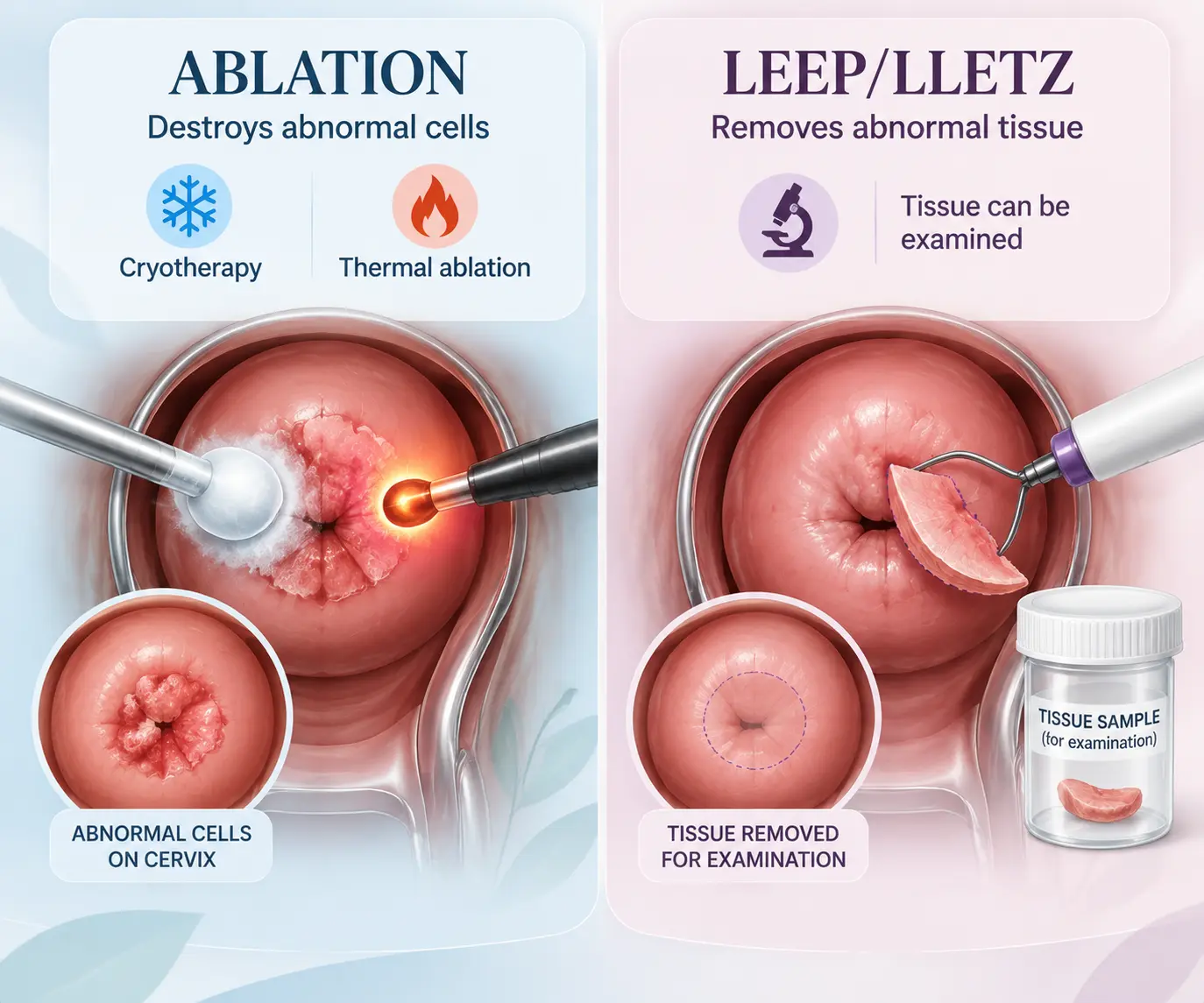
The choice between these treatments depends on where the abnormal cells are, how extensive the changes are, and what your tests and examination show.
Will these treatments hurt?
The experience can vary from person to person, but the procedure is usually short and done under local anaesthesia.
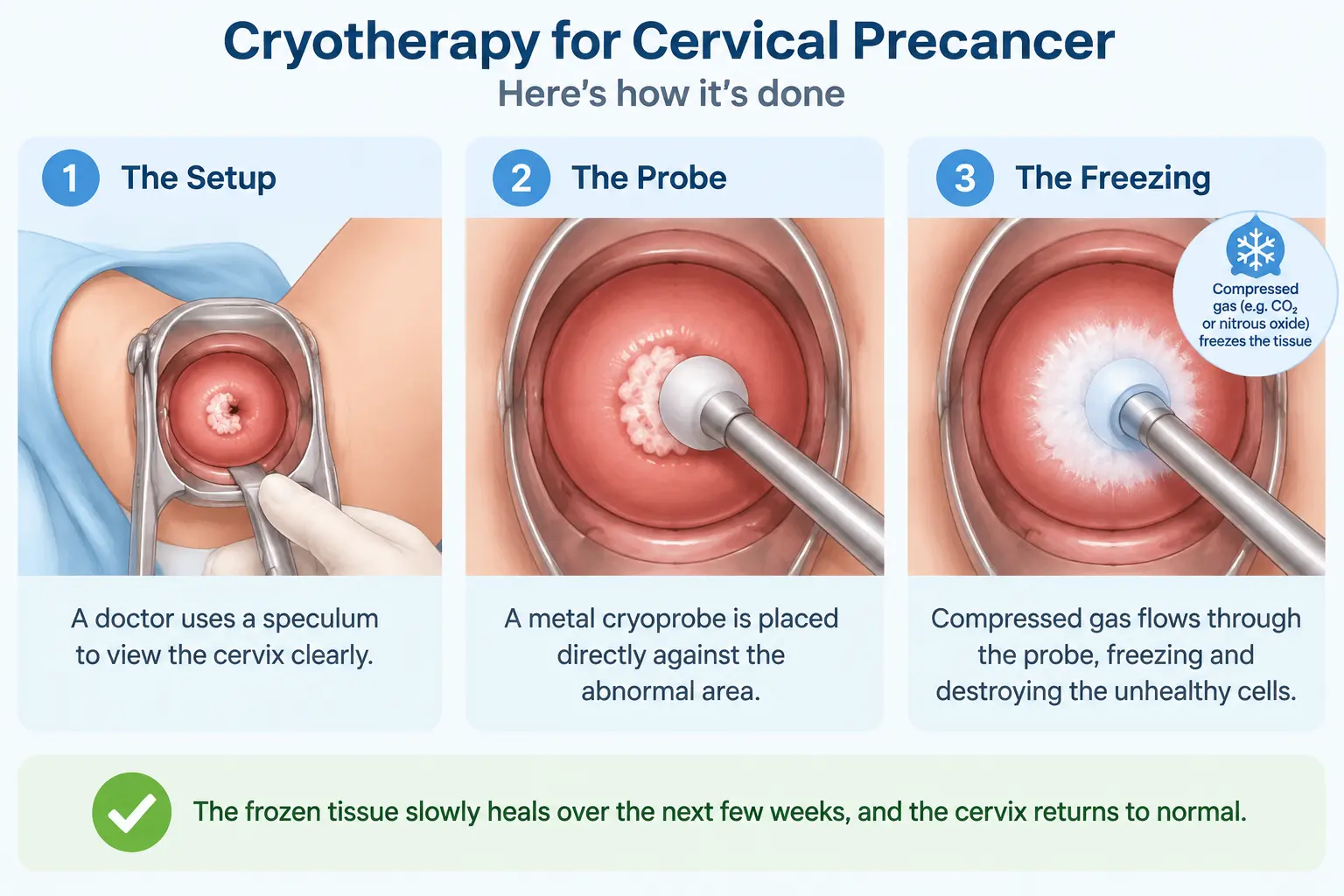
Cryotherapy
Cryotherapy uses extreme cold to destroy abnormal cervical tissue.
It is an ablative (a quick, non-surgical treatment) treatment, meaning the abnormal tissue is destroyed rather than cut out.
It can be performed as an outpatient procedure, which means it is performed in a clinic without anaesthesia, and has been used for cervical precancer for many years.
Thermal Ablation
Thermal ablation, uses a heated probe to destroy abnormal cervical tissue.
Why Might Your Doctor Recommend LEEP or LLETZ?
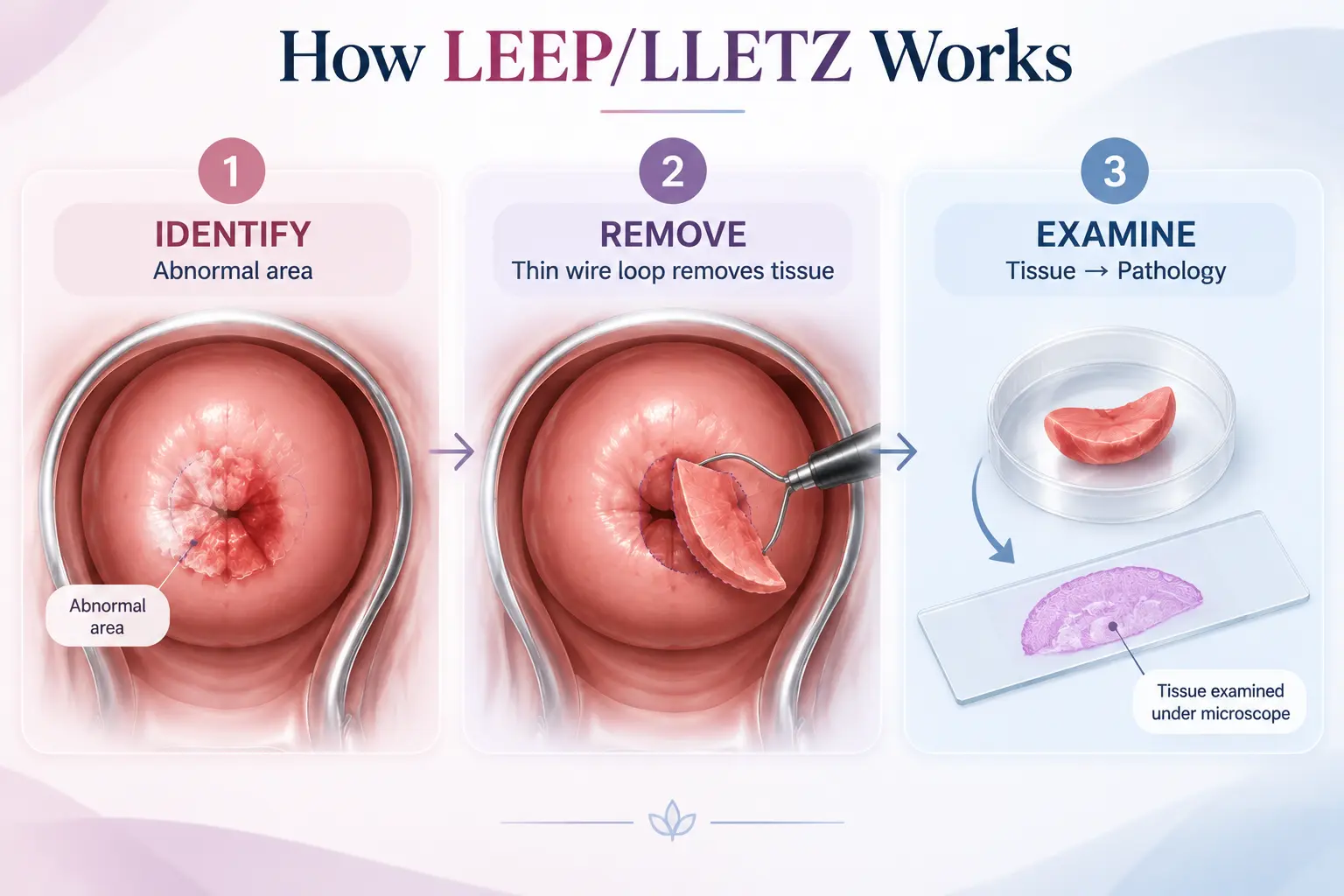
LEEP, also known as LLETZ, is different from an ablative procedure.
Instead of destroying the abnormal tissue, a thin wire loop is used to remove it.
One important advantage is that the removed tissue can be sent to a laboratory for histopathological examination.
That gives the pathologist an actual specimen to examine.
This can matter when we need more information about the extent of the abnormality or want to make sure a more serious area has not been missed. LEEP can be used to remove cervical precancer and is typically performed as an outpatient procedure using local anaesthesia.
Having a LEEP does not automatically mean you need “major surgery.” It means the abnormal tissue needs to be removed and examined more closely to guide the next steps in treatment.
When Is a Cone Biopsy Needed?
A cone biopsy, or conization, removes a larger cone-shaped piece of tissue from the cervix and cervical canal.
It may be recommended when the abnormal area needs a larger excisional specimen or when the lesion cannot be adequately evaluated with a smaller procedure.
Unlike LEEP, cone biopsy is generally performed in a hospital setting and may require general anaesthesia.
It may be necessary to properly evaluate an abnormality that extends further into the cervix or cannot otherwise be adequately assessed.
Will your future child bearing capacity be affected?
If you want to become pregnant in the future, tell your gynaecologist before treatment.
That doesn’t mean necessary treatment should be avoided.
It means your reproductive plans should be part of the discussion when different appropriate options are available.
For example, if you have CIN 2 and meet the criteria for close observation, your doctor may discuss the potential benefits and drawbacks of surveillance versus treatment with you.
If treatment is necessary, the amount and depth of cervical tissue removed will be less.
The goal is to treat the precancer adequately while avoiding unnecessary removal of cervical tissue.
This is one reason a consultation should go beyond simply asking, “What is the least invasive treatment?”
A better question is:
“What is the least invasive treatment that will safely manage my particular lesion?”
What Happens After Treatment?
Treatment is not necessarily the final step.
You will usually need follow-up because cervical HPV infection or abnormal cells can persist or recur.
Exactly what follow-up you need depends on your original diagnosis, treatment and previous screening history.
This is particularly important after treatment for high-grade cervical abnormalities.
Think of it as two separate parts of care:
Treatment deals with the abnormality. Follow-up checks whether it is coming back again.
Skipping follow-up because the procedure went well can mean missing a persistent or recurrent abnormality.
Questions to Ask Before Choosing Treatment
If you’ve been told you have cervical precancer, you don’t need to memorise medical terminology before your appointment.
Start with a few practical questions:
Ask whether the diagnosis is CIN 1, CIN 2, CIN 3 or something else.
This can help you understand whether an ablative treatment is even an option.
Ask what makes the proposed approach more appropriate for your specific findings.
This is particularly relevant when LEEP/LLETZ or cone biopsy is being discussed.
If you are planning children, make sure your doctor knows.
Understanding the surveillance plan is part of understanding the treatment itself.
What You Should Take Away
Can cervical precancer be treated without major surgery?
Yes, in selected cases.
Some low-grade abnormalities can be monitored. Appropriate precancerous lesions may sometimes be treated with cryotherapy or thermal ablation, while other situations call for an excisional procedure such as LEEP/LLETZ or cone biopsy.
If you’ve been diagnosed with cervical precancer, ask your gynaecologist to explain your biopsy result, the location and visibility of the lesion, the treatment options available to you and why they recommend one over another.
Finding cervical precancer early gives doctors a chance to intervene before invasive cervical cancer develops.
And understanding your options can make that next appointment feel much less frightening.